


Children & The Entertainment Industry
- Nov 27, 2019
- 5 min read
Updated: Nov 27, 2019
All of us have celebrities that we idolize and feel connected to in some way, but does Hollywood portray who they really are?

It is no secret that fame can bring incredible rewards, but it is likely that most famous people would acknowledge that there are downsides. To some, the negative side of fame is more damaging than to others; however, young children are especially vulnerable to this negative side. Growing up in the public eye can be extremely difficult for young actors. There are the pressures of Hollywood, the temptations, and the constant scrutiny from the media.
From Hollywood’s Golden Age to now, there have been innumerable case histories of children who found success on the stage only to be plagued by substance abuse and mental and emotional breakdowns as they advanced into adulthood. In this blog post, we will be exploring how the entertainment industry and fame can have a lasting impact on child stars. We will look at three cases that show us how fame is a dangerous drug for children and their parents.

David Hosier is a psychologist who specializes in studying the devastating effects of childhood trauma. He outlines three major problems that child stars encounter during their careers.
1. Achieving Iconic Status
The public projects their ideas of what is good, beautiful, and innocent onto the famous child, which makes the child a symbol/icon that represents these qualities. The child is romanticized and placed on a pedestal, which is an image that is impossible to live up to.
2. Financial Pressure
A successful child star likely earns more than his or her parents. Here, there is a reversal of ordinary roles, as the child becomes the family’s chief bread-winner. In some cases, it is possible that parents will push their child to do work that he/she does not want to do.
3. Loneliness
Child stars are set apart from other children and this can deprive them of a fundamental psychological need.
To gain a better understanding of how fame can negatively impact the lives of young children, we are going to explore the childhoods of three celebrities whose adult lives were greatly affected by their childhood fame.
Judy Garland

Actress and singer Judy Garland was the star of many classic musical films, including “The Wizard of Oz” and is known today for her incredible talent but also her “tragic” life.Judy Garland started performing at two years old. When Judy was nine or ten, her mother started a routine of giving her pills in the morning to energize her and would give her sleeping pills at night to help her sleep. This caused Judy to rely on pills at a shockingly young age. The pressures of early stardom greatly affected her physical and mental health.
When Judy was only 13 years old, she was signed to MGM Studios in 1935. Being under this contract opened Judy up to a world of criticism about her appearance. When Judy was 14 years old, the studio felt that she was gaining too much weight. They served her nothing but chicken broth and cottage cheese and had a network of informants monitoring her diet. She was also prescribed amphetamine-based diet pills by “studio doctors” to regulate her weight. Hollywood pressured Judy to do dangerous things to her body in order to become the image that they wanted or even needed her to be to get their desired outcome.

As she began taking on more roles, it was not unusual for her days to end at 4 or 5am. To maintain this routine, Judy turned to pills. This led to a destructive pattern that ultimately turned into a lifetime addiction and by the age of 25, Judy was on the verge of a nervous breakdown. Judy remained a vibrant performer during the rest of her career, but she experienced serious financial, health, and family troubles. Her substance abuse problems culminated in her early death from an accidental overdose in 1969 when she was only 47.
Michael Jackson

Michael Jackson was one of the biggest child stars of his time. He started performing as a part of The Jackson Five at six years old. He always seemed so happy and carefree on stage, but this was only a facade. In interviews, Michael often described his childhood as being “lonely” and “unhappy.”
When Michael’s father, Joe Jackson, discovered that his children had musical talent, he became physically and emotionally abusive. Michael recalls that he would beat them with a belt buckle or the cord of an electric kettle. The Jackson 5 were not allowed outside to play with other children. They rehearsed for five hours a day after school. Michael revealed that he would see happy children playing together from his rehearsal room and cry because he could not join them.

As an adult, he felt that his childhood had been stolen from him because of his status as a celebrity. In response to this, he tried to relive his childhood as an adult. Michael claimed that the reason he acted so childish as a grownup, was because he was trying to make up for the time he lost.
Drew Barrymore

Barrymore made her big screen debut when she was four years old, but landed one of her most famous roles at the age of seven as Gertie in E.T.: The Extraterrestrial (1982). This role made the young actress an instant child star. Being thrown into the spotlight at such a young age changed her life.
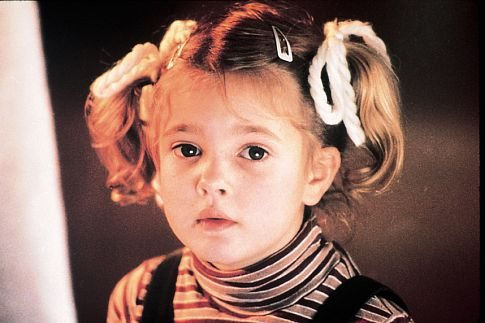
Her mother started bringing her to auditions before she was 1 years old and nightclubs when she was 8 years old. She remembers she would go to nightclubs with her mom and her mom’s friends at least 5 times a week when she was 8. he began smoking and drinking by 9, marijuana at 10, and began snorting cocaine at 12. She was placed in a rehabilitation center at 13 years old and continued to make headlines for her controversial behavior into the ‘90s.
Fortunately, Barrymore’s luck began to change in 1995, when she founded her own production company, Flower Films. She ultimately was able to rise above her wild-child reputation and is celebrated today as a talented actress.
Potential Counterargument
Of course, there are also many child stars who can cope well with their fame and lead admirable and sane lives. One may argue that parenting plays a great role in this. Natalie Portman was a child actor and went on to graduate from Harvard and won an Oscar for her role in Black Swan in 2010. Dakota Fanning is currently studying at NYU and Miranda Cosgrove took a break from acting to study at University of California.
Although many are able to beat the odds and overcome the stereotype of “child stars gone wrong”, children who are thrown into working in the entertainment industry at incredibly young ages are still exposed to things that children should never be exposed to.
As celebrities, Judy Garland, Michael Jackson, Drew Barrymore and the countless others that we mentioned today were all expected to be perfect as children. Even when they were not in front of a camera, their personal lives were studied by everyone. Their parents did not have their best interests at heart and they were all famous before any child could realistically have a true understanding of what fame was. These three examples show that fame can be a dangerous drug for children and their parents.
Sources
https://www.biography.com/news/michael-jackson-childhood-peter-pan-syndrome
https://www.theguardian.com/music/2018/jun/27/joe-jackson-one-of-the-most-monstrous-fathers-in-pop
https://childhoodtraumarecovery.com/all-articles/childhood-fame-the-downside/
https://www.cnn.com/2012/03/28/showbiz/lohan-troubled-timeline/index.html

Comments